How digital twins for manufacturing are supercharging efficient factory operations
Productivity, profitability, and safety all depend on smooth and predictable operations in manufacturing. But keeping any factory running efficiently is a complex, continual process.
With so much to manage across machinery and operating teams, to environmental controls and production schedules, a single disruption can quickly impact the entire production line, limiting output, losing thousands, if not millions in revenue, and even compromising safety.
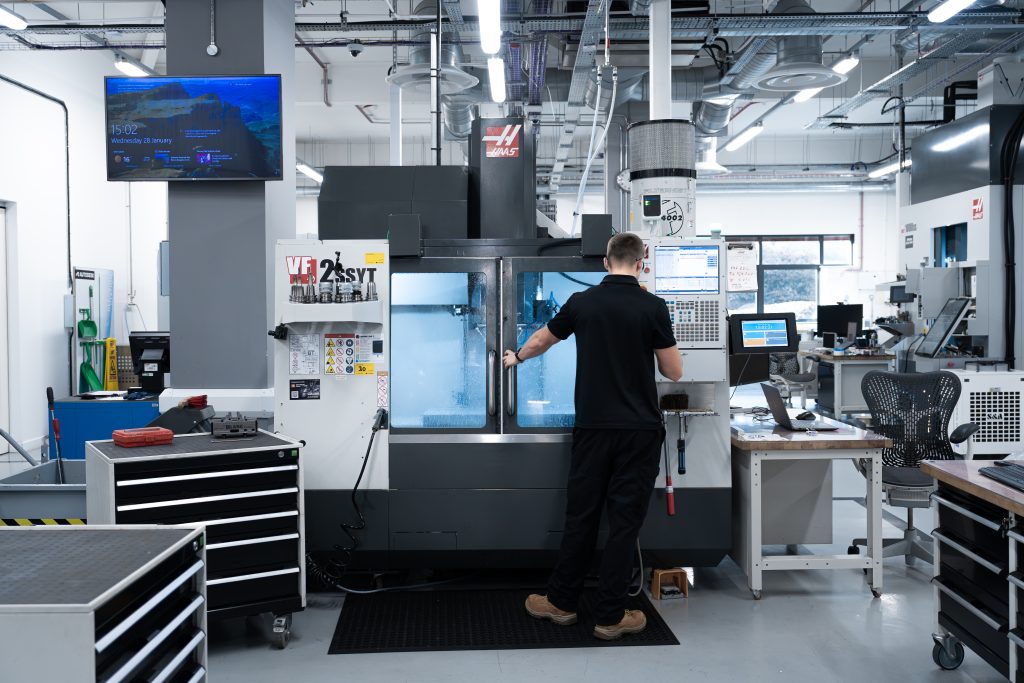
The operational challenges manufacturers face
Many factories operate via a web of multiple disconnected systems, including manufacturing execution systems (MES), equipment controls, and building management systems. Data and processes run in silos, making it difficult for teams to get a complete, unified understanding of operations, let alone the ability to manage them together.
As Seth Hindman, Director of Product Development at Autodesk explains, “All of the data is completely siloed in a variety of different areas, many, many different systems. It’s very hard for all this information to coalesce.”
Even in modern facilities, aging infrastructure adds complexity. Managing operations in manufacturing environments often still relies on manual monitoring, spreadsheets, and analogue processes.
In industries such as automotive, where production lines are highly capital-intensive, unplanned downtime is a costly problem. “Whenever a line is disrupted, millions of dollars get lost,” says Hindman. On top of this, manufacturers have to coordinate a growing asset list of materials and machine operations, often without the necessary integrated visibility.
Where Autodesk Tandem makes a difference for manufacturing facilities
Autodesk Tandem enables manufacturers to build a digital twin of a factory, connecting data from across the production floor, building systems, and environmental sensors into a single, unified view. Rather than working in isolation, managers and operators can see the factory as an interconnected ecosystem.
Robert Bray, Vice President at Autodesk Tandem explains, “With Tandem, customers can connect and contextualize data from machines on the shop floor, environmental control systems, and maintenance systems, leveraging that data to drive better outcomes.”
Tandem adds context, highlighting where problems might exist and pointing teams toward a solution. As Hindman puts it, “Tandem is brilliant at overcoming the contextual barrier, highlighting and orienting you to where the problem could be.”
With this integrated view, factory operators can move toward proactive, predictive management. Where maintenance would previously only be carried out after equipment fails and causes a costly disruption, Tandem gives operators the insight to anticipate issues before they escalate.
Hindman notes, “If the telemetry is telling us that there’s a machine about to go down, you can plan for maintenance and shift production orders to another line.” This proactive approach can keep production moving smoothly and keep revenue on track.
With Tandem, customers can connect and contextualize data from machines on the shop floor, environmental control systems, and maintenance systems, leveraging that data to drive better outcomes.
Robert Bray, Vice President of Autodesk
1. Optimizing production through continuous improvement
Beyond preventing downtime with Tandem, Autodesk’s ecosystem of tools helps manufacturers improve production efficiency in other ways. Utilizing FlexSim, factories can identify bottlenecks, refine workflows, and predict throughput in a simulation model before making changes on the production floor.
Bray explains, “the purpose behind FlexSim is really to optimize throughput based on your production needs, you can evolve the design and refine it, then optimize it.”
FlexSim gives manufacturers the capability to run “what-if” scenarios, testing potential changes digitally before implementing them in the real world. According to Hindman, “The production manager can leverage the simulation model, run what-if scenarios, and get feedback around how best to expand the use of technology.”
This approach enables teams to continuously improve operations, balancing speed, quality, and safety, while maintaining ongoing production. Leveraging near-real-time data from Autodesk Tandem and the simulation capabilities of FlexSim simultaneously give factory management and operations teams new, educated insights, providing the potential to improve overall operations.
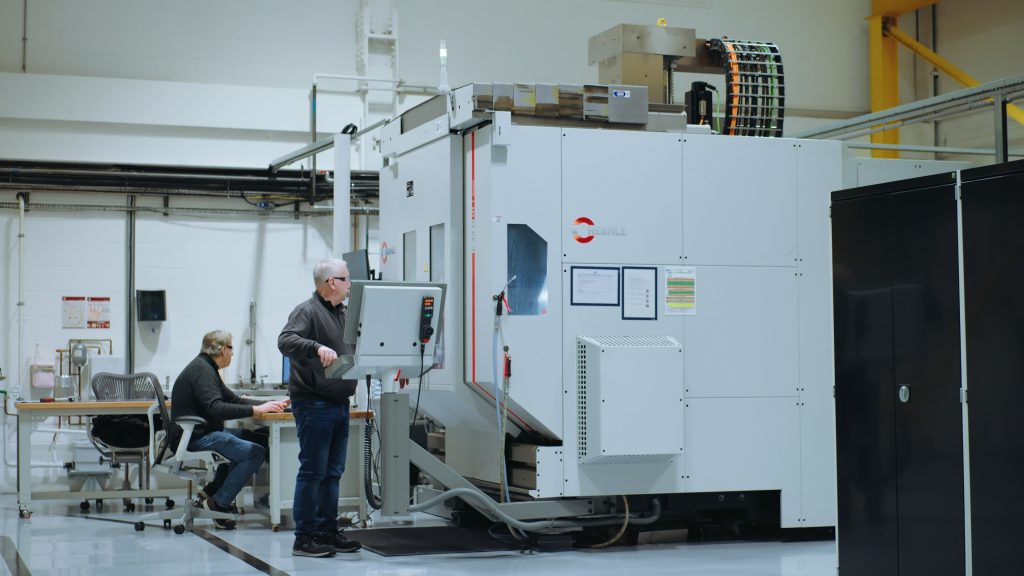
2. Modernizing legacy factories
Many manufacturing facilities were built with relatively limited digital infrastructure. Tandem helps modernize these facilities by enabling factories to create a living digital replica of the site, unifying insights across point solutions and clouds, and heterogeneous file formats.
Hindman emphasizes the importance of this approach: “We need to make it easier for our customers to capture information and facilitate continuous change. With Tandem, they can tap into living documents.”
By reducing friction between different parts of the infrastructure and making data far more actionable, Tandem empowers legacy facilities to become more resilient, adaptable, and efficient.
We need to make it easier for our customers to capture information and facilitate continuous change. With Tandem, they can tap into living documents.
Seth Hindman, Director of Product Development at Autodesk
3. Supporting decision-making with AI-driven insights
Soon, digital twins in manufacturing will be able to leverage AI-driven insights. As capabilities progress from testing to implementation, users will come to rely on AI to help process large volumes of data, detect anomalies, and provide actionable recommendations.
Hindman explains, “AI can detect certain things and make a cognitive jump so we can change observation into action for our customers.”
In this context, AI and the digital twin act as a digital partner, enabling manufacturers to anticipate challenges, prioritize interventions, and make smarter decisions across what are highly intensive, complex operations.
Translate your factory data into contextual insights. Find out more about how digital twins will help you reduce downtime and improve throughput across your entire factory operation.
Building smarter, more resilient factories
Autodesk Tandem gives manufacturers the tools to integrate systems, anticipate downtime, optimize production, and continuously improve operations. By turning fragmented data into a single source of real-time insight, digital twins can enable predictive maintenance, help factories run smoother, and reduce risk.
If you’re interested in how Autodesk Tandem can help you to better manage, optimize, and improve your factory operations, we’re here to help.
More resources
Discover more articles, webinars, and whitepapers. Here are a few we think could be of interest.